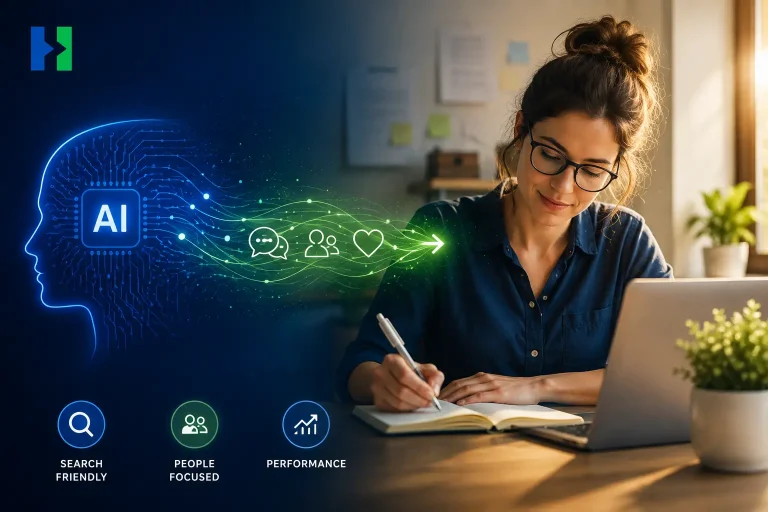
Why Integrated Communication Is Essential for Businesses in 2026
In 2026, companies operate within an ecosystem where the boundaries between traditional communication and digital communication have completely vanished. Audiences are everywhere, all the time — and far more demanding&he...
In 2026, companies operate within an ecosystem where the boundaries between traditional communication and digital communication have completely vanished. Audiences are everywhere, all the time — and far more demanding than ever before.
To remain competitive, brands must now combine classic communication tools with modern digital techniques within a fully harmonized strategy: this is the essence of integrated communication.
Traditional Communication: A Solid Foundation, Yet No Longer Sufficient
Conventional channels : print advertising, flyers, press, radio, public relations, events … continue to play a vital role. They reinforce credibility, strengthen the brand image, enable direct contact, and foster proximity.
However, in 2026, relying on traditional channels alone is no longer enough.
Why?
Because today’s consumer is no longer satisfied with a one-way message. They want to interact, verify, compare, comment, and share — elements that traditional media cannot always provide.
This is why it is necessary to add modern techniques, not replace the existing ones. True effectiveness lies in the combination of both worlds.
Digital Communication: Agility, Data, and Personalization
Social media, SEO, content marketing, sponsored campaigns, marketing automation, short-form video…
Digital communication brings:
• precise targeting,
• advanced personalization,
• measurable results,
• rapid adaptability,
• and, above all, direct interaction with the audience.
Yet digital communication alone can quickly become fragmented and inconsistent if everything is not aligned.
Why Integrated Communication Has Become a Strategic Imperative in 2026
The strength no longer stems from the channels themselves, but from the consistency of the message across all channels, both traditional and digital.
An integrated communication approach allows companies to:
• retain the impact of traditional media,
• leverage the agility of digital platforms,
• create a seamless experience between a flyer, a radio advert, a TikTok video, a newsletter, or a web banner,
• enhance brand recall and trust,
• and maximize every budgeted franc invested in communication.
In 2026, a brand can no longer choose between traditional communication or digital communication.
It must master both simultaneously — and ensure that they work together.
The Crucial Role of Digital Agencies in This Hybrid Landscape
To achieve a smooth, unified communication flow, businesses need guidance capable of managing:
• visual identity and editorial direction,
• coordination between traditional channels and digital content,
• coherent multi-channel campaign development,
• performance analysis,
• and continuous strategic optimization.
A digital agency provides this comprehensive vision.
It transforms scattered actions into a fluid system where each message reinforces the next, where every channel becomes an extension of the brand, and where every campaign tells the same story — everywhere.
Integration Is the Key to Performance
In 2026, the most successful companies are those that combine the reassuring effectiveness of traditional media with the innovative strength of digital communication.
Integrated communication is no longer a trend — it is a necessity for any business aiming to remain visible, coherent, and high-performing.
And partnering with a digital agency ensures this consistency, maximizes results, and builds a strong, unforgettable brand presence.